
IMHA in Dogs
Overview
Although the exact incidence of IMHA in dogs is unknown, it’s considered one of the most common autoimmune conditions faced by our canine companions. Because the condition is potentially deadly, pet parents should familiarize themselves with the causes, symptoms, and treatment for IMHA in dogs.
This article will serve as a source of information for pet parents seeking to understand their dog’s IMHA diagnosis. If you suspect your pet may have IMHA, seek emergency attention.
What Is IMHA in Dogs?
Immune-mediated hemolytic anemia in dogs, abbreviated IMHA, is a life-threatening condition in which the immune system attacks and destroys the dog’s own red blood cells. You may also see IMHA called autoimmune hemolytic anemia (AIHA).
The name of this condition describes exactly what’s happening in a dog diagnosed with IMHA:
- “Immune-mediated” means that the condition is being caused by the dog’s own immune system.
- “Hemolytic” means that red blood cells are being destroyed. The prefix “hemo” means “blood” and “lysis” means “to break open.”
- Finally, “anemia” is the end result of red blood cell destruction. Because the red blood cells are being destroyed, a dog with IMHA becomes severely anemic, which means there is an abnormally low level of red blood cells circulating in the dog’s bloodstream.
If there is concurrent destruction of platelets (immune-mediated thrombocytopenia or IMTP), the condition is called Evans syndrome. Prognosis is worse for dogs who have both IMHA and IMTP.
If you suspect your dog has IMHA, you should seek emergency veterinary care as soon as possible. IMHA can progress quickly, and it’s life-threatening without treatment.
What Causes IMHA in Dogs?
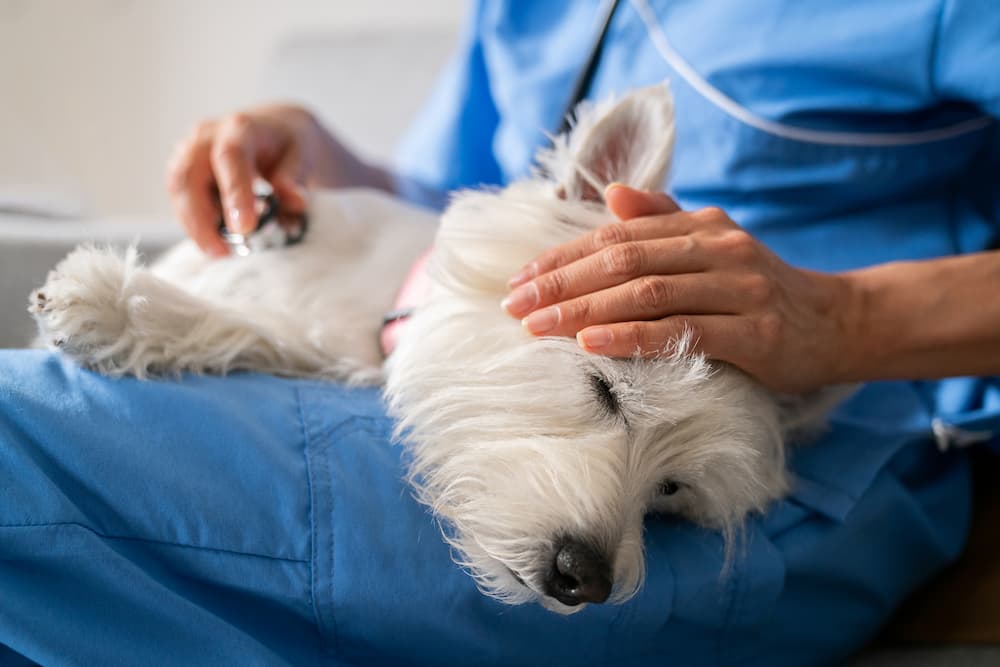
IMHA in dogs can be categorized as primary or secondary.
With primary IMHA, the cause is unknown. A word for a condition that occurs with no known cause is “idiopathic.” Idiopathic or primary IMHA accounts for 60-75 percent of cases of IMHA in dogs (1).
Secondary IMHA has a known underlying cause. Infections and cancer are the most common causes of secondary IMHA. Potential causes of secondary IMHA include:
- Infections: These are most commonly tick-borne conditions like ehrlichiosis, babesiosis, or anaplasmosis. However, leptospirosis and heartworm disease can also cause IMHA in dogs.
- Cancer: Examples of cancers that can cause IMHA include lymphoma, hemangiosarcoma, or histiocytic sarcoma.
- Drugs: IMHA is a rare reaction to certain medications, such as antibiotics like trimethoprim-sulfonamide, penicillins, or cephalosporins.
- Vaccination: Recent vaccination may be a trigger for IMHA in some cases, but this remains controversial. Some studies have identified a link while others have not. Because vaccines involve stimulation of the immune system, it may be something to avoid in dogs who’ve experienced IMHA. If your dog has had an episode of IMHA or develops IMHA shortly after vaccination, it’s important to speak with your veterinarian about whether to proceed with future vaccinations.
Some breeds have a higher risk of IMHA, which suggests that genetics may play a role. Examples include:
- Cocker Spaniels
- Miniature Schnauzers
- Shih Tzus
- Bichon Frisé
- Maltese
- Old English Sheepdog
- Poodles
- Dachshunds
- Irish Setter
- English Springer Spaniels
Can stress cause IMHA in dogs? While stress may be a contributing factor in dogs who are genetically susceptible to IMHA, stress alone is not a known trigger for IMHA. Still, it’s worth noting that stress can increase inflammation in the body, which may contribute to your dog’s overall health.
IMHA in Dogs Symptoms

Red blood cells are vital for transporting oxygen throughout the body. Because there are fewer red blood cells in circulation, most IMHA symptoms in dogs are related to oxygen deprivation in the tissues. Untreated, this lack of oxygen can cause organ damage, sometimes leading to organ failure.
Symptoms of IMHA in dogs include:
- Weakness
- Low energy levels (lethargy)
- Fainting or collapse
- Pale gums
- Rapid heart rate
- Rapid breathing
- Dark urine
- Vomiting
- Yellowing of the skin, gums, and whites of eyes (jaundice)
Dogs with IMHA are at an increased risk of serious blood clots, such as pulmonary thromboembolism. These pets may experience respiratory distress or sudden death.
Diagnosing IMHA in Dogs
Following a physical examination of your pet, the first diagnostic that your veterinarian will likely want to run is a complete blood count (CBC), which tells your veterinarian about the number of red blood cells, white blood cells, and platelets in circulation. When a dog has IMHA, the CBC will usually show:
- Decreased red blood cell counts
- Increased white blood cell counts
- +/- Decreased platelet counts
The veterinarian should also look at a sample of blood under the microscope. There are characteristic changes to the red blood cells that can indicate your dog has IMHA. In some cases, red blood cell parasites that trigger IMHA can be seen. An example of a parasite that your veterinarian may see under the microscope is Babesia, which is contracted through tick bites or bites during dog fights.
Blood chemistry and urinalysis will also be performed to check the health of your dog’s organs, which can be damaged by low oxygen levels.
Other tests your veterinarian may perform include:
- Saline agglutination test: A blood test that helps confirm if the immune system is attacking red blood cells
- Coomb’s test: A blood test that helps detect if the immune system is attacking red blood cells
- Coagulation panels: Blood tests to determine if your dog is at an increased risk of blood clots or is developing another life-threatening condition—disseminated intravascular coagulation—as a result of IMHA
- Radiographs (X-rays) of the chest and abdomen: Important for ruling out cancer
- Abdominal ultrasound: Important for ruling out cancer
- Infectious disease tests: Rule out tickborne illness, heartworms, or leptospirosis
Treating IMHA in Dogs
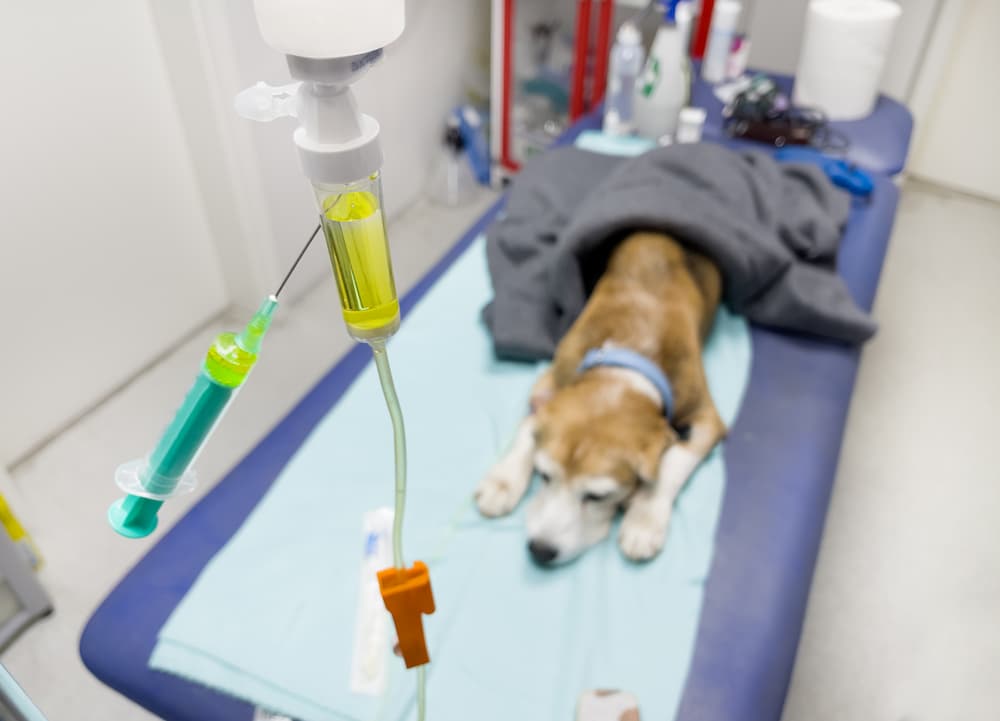
IMHA is a medical emergency. Dogs with IMHA will need to be hospitalized for treatment.
Immediate Treatment
Dogs with IMHA require emergency treatment. Treatment for IMHA in dogs includes:
- Blood transfusions: Because the dog is anemic and failing to deliver adequate oxygen to their tissues, blood transfusions may be necessary. Blood transfusions help keep the patient stable while the medications get to work. Multiple transfusions may be necessary, and your dog will need to be monitored for a transfusion reaction.
- Immunosuppressive drugs: Most commonly, this will be steroids like prednisone or dexamethasone. If steroids alone are insufficient, the dog may be given other medications like cyclosporine.
- Blood clot prevention: The dog may receive heparin to reduce the risk of major blood clots. They might also receive antiplatelet therapy, like clopidogrel or low-dose aspirin.
- Intravenous fluid therapy: This is important for supporting blood flow to the kidneys. Placement of an IV catheter also gives your veterinarian easy access for administering emergency medications directly into the bloodstream. The catheter will also be used for blood transfusions.
- Oxygen supplementation: This won’t help most anemic patients but may help dogs with blood clots in their lungs.
If your dog has secondary IMHA, the condition that is causing the IMHA will also be treated if possible. For example, a dog with ehrlichiosis from a tick might be started on doxycycline.
Long-Term Management
While your dog is recovering from IMHA, they will need to continue treatment with immunosuppressants. Most commonly, this is with steroids like prednisone. If prednisone alone is inadequate for maintaining remission, other immunosuppressive medications may be necessary. Examples of other drugs that may be used include cyclosporine or azathioprine.
Treatment for IMHA often continues for over half a year after the initial episode. Immunosuppressive drugs may be slowly tapered until eventually stopping or finding the lowest dose at which remission is maintained. Make sure to speak with your veterinarian about the potential side effects of steroids and other immunosuppressive medications. Tapering requires close monitoring to ensure your dog is tolerating reduced drug dosages.
Treatment with drugs to prevent blood clots is usually tapered over the weeks after the dog is stabilized. Long-term management with clopidogrel or low-dose aspirin may be recommended, as well. Do not give your pet aspirin without speaking to your veterinarian.
IMHA in Dogs Life Expectancy
Unfortunately, the mortality rate for primary IMHA is high, at 30–70 percent (1, 2). Dogs may have a worse prognosis if their body is not creating new red blood cells to replace the destroyed ones (nonregenerative anemia), if they develop blood clots, if they have concurrent loss of platelets (Evans syndrome), or if the inflammatory response is severe. Medications to reduce the risk of blood clots may improve outcomes. Around 20 percent of dogs who survive will relapse within one to two years of stopping treatment (3).
The life expectancy for secondary IMHA is more variable. If IMHA occurs due to a treatable condition, like ehrlichiosis, outcomes may be favorable as long as the dog survives the initial episode and the inciting cause is treated. However, some causes of secondary IMHA, like lymphoma or histiocytic sarcoma, have poor prognoses even with targeted treatments.
Cost to Treat
The cost to treat IMHA will vary based on:
- Geographic location
- Type of clinic you go to (private practice vs. emergency vs. university)
- Severity of your dog’s symptoms
- Development of complications
- Presence of underlying conditions
Because treatment requires hospitalization, you should prepare yourself for higher costs. Staying at a hospital for several days with routine treatment is usually around $2,500 to $4,000. However, these costs can quickly increase if your dog needs multiple blood transfusions or develops secondary complications, like major blood clots. It’s a good idea to ask for an estimate that covers routine care for IMHA and the worst-case scenario for IMHA.
You should expect to pay anywhere from $100 to $200 per month for continued care at home once your pet is stable.
Pet insurance is likely to cover the cost of IMHA if your dog has never had a prior episode. Speak with your veterinarian about whether payment plans or CareCredit are options for you. You might also check out fundraising opportunities or non-profits to see if there is any assistance available.
How to Prevent IMHA in Dogs
Because most cases of IMHA are primary, meaning no known cause can be identified, the condition isn’t usually preventable. However, some cases of secondary IMHA are preventable. Ensure your dog is vaccinated against leptospirosis and keep them on parasite preventatives that protect them from ticks and heartworms. If your dog has had an episode of secondary IMHA before, speak to your veterinarian about whether vaccines are safe for your dog.
References
- Piek, C J et al. “Idiopathic immune-mediated hemolytic anemia: treatment outcome and prognostic factors in 149 dogs.” Journal of veterinary internal medicine vol. 22,2 (2008): 366-73. doi:10.1111/j.1939-1676.2008.0060.x
- Balch, Andrea, and Andrew Mackin. “Canine immune-mediated hemolytic anemia: pathophysiology, clinical signs, and diagnosis.” Compendium (Yardley, PA) vol. 29,4 (2007): 217-25.
- Sparrow, Richard et al. “Comparison of timing of relapse in dogs with nonassociative immune-mediated hemolytic anemia, thrombocytopenia, or polyarthritis.” Journal of veterinary internal medicine vol. 38,2 (2024): 1035-1042. doi:10.1111/jvim.17004