

Calming Chews for Dogs: 7 Ingredients to Know About

All featured products are chosen at the discretion of the GreatPetCare editorial team and do not reflect a direct endorsement by the author or reviewer.
Dogs can feel stressed or anxious for many reasons, such as hearing loud noises, meeting new people or pets, changes in their daily routine, or physical discomfort.
The good news is that there are ways to alleviate your dog’s stress and help them feel more at ease. This can include limiting stress triggers and using behavior training. Calming chews for dogs may also be helpful when used as part of a well-rounded approach.
Managing dog anxiety often involves working with your veterinarian or a veterinary behaviorist. Your dog may need behavior modification training, environmental management, and, in some cases, prescription medication, says Dr. Liza Cahn, a Seattle veterinarian with Embrace Pet Insurance. “Other types of calming aids, such as ThunderShirts, pheromones, and calming chews, may also be helpful when used as part of a multimodal approach to treatment.”
But do calming chews actually work for dogs? We asked veterinary experts to share their insights. We’ll also take a closer look at common ingredients found in calming treats to better understand how effective they may be and whether they’re safe for dogs.
What Are Calming Chews for Dogs?

Calming chews and calming treats for dogs are soft, chewable supplements that are intended to help reduce stress and anxiety. You can buy them without a prescription. While these supplements may be beneficial for some dogs, they are relatively recent and not closely regulated in veterinary medicine, Dr. Cahn says.
Dog calming chews often contain ingredients believed to influence brain chemistry, particularly neurotransmitters like serotonin, dopamine, GABA, and glutamate, says Kate Anderson, DVM, DACVB, assistant clinical professor at the Duffield Institute for Animal Behavior, Cornell University College of Veterinary Medicine, in Ithaca, New York. “Neurotransmitters are chemical messengers in the brain that help regulate mood, stress, and arousal,” Dr. Anderson says. “While some ingredients show promise, scientific support varies, and not all are appropriate for every pet.”
If you’re wondering whether calming chews are safe for dogs, it’s important to know that research is limited. Many alternative products and therapies have not been studied enough to clearly show how well they work.
Before you shell out money on calming treats for dogs, talk with your veterinarian about your dog’s health history, any medications they take, and whether calming chews are a good fit for your dog’s overall care plan.
Dog Calming Chews: 7 Ingredients to Know About
Below is a closer look at common ingredients in calming chews for dogs and the benefits they may offer.
L-tryptophan: This is an amino acid that helps the body make serotonin, a brain chemical that affects mood and helps with relaxation. By helping increase serotonin levels, L-tryptophan may help dogs feel calmer and more relaxed, especially during stressful situations, Dr. Cahn says.
L-theanine: Another amino acid, L-theanine is found in green tea. It helps increase calming chemicals in the brain, including GABA, serotonin, and dopamine. This helps promote relaxation, Dr. Cahn explains.
Thiamine: Also known as vitamin B1, thiamine helps regulate a dog’s nervous system (1). Because the body only stores limited amounts of thiamine, dogs need to get it regularly from their diet. It plays a role in keeping nerve cells healthy and helping them produce energy and important brain chemicals. While thiamine is important for overall nerve health, more studies are needed to determine exactly how B vitamin supplements affect behavior.
Melatonin: This is a natural hormone that plays a role in sleep. It can calm dogs by regulating their circadian rhythm and promoting mild sedation. Melatonin is often used for anxiety, noise phobias, and sleep disturbances. However, research supporting its use for anxiety in dogs is limited and not conclusive, Dr. Anderson says.
Alpha-casozepine: This ingredient comes from milk and helps support the brain’s natural calming system. It works best when given regularly over several days or weeks, rather than as a one-time dose. Studies show alpha-casozepine may help reduce stress-related behaviors in dogs and cats, Dr. Anderson says.
Cannabidiol (CBD): CBD works with systems in the body that help control mood and stress, which may help reduce anxiety in dogs. It may also help with conditions like seizures or arthritis pain, Dr. Anderson says.
Chamomile: There is limited research on chamomile for dogs, but some studies suggest it may have calming effects. More research is needed to confirm how well it works for calming dogs, Dr. Anderson says.
It’s important to note that herbal ingredients in calming chews are generally considered safe, but they haven’t been studied as much as other ingredients. Because of this, there’s less research showing how well they work, Dr. Kahn says. Never give your dog (or cat) human supplements, unless directed to do so by your veterinarian, as some herbal ingredients that are safe for people can be toxic to pets.

Here are some examples of calming chews for dogs available on the market:
Covetrus Behavior Chews
These calming treats for dogs contain ingredients that may help reduce stress and promote relaxation, including L-tryptophan, a colostrum calming complex, L-theanine, and thiamine. These liver-flavored chews are designed to work quickly and can be given during stressful situations.

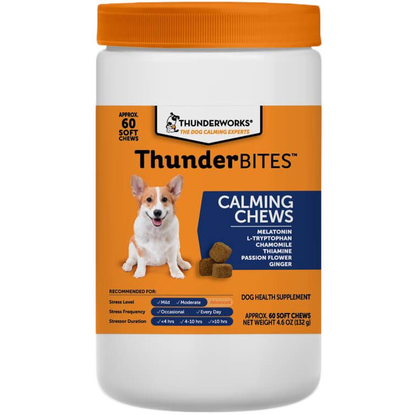
ThunderBites
These calming dog chews are meant to be given about 30 minutes before a stressful event. They contain ingredients such as chamomile, thiamine, L-tryptophan, and melatonin, which may help dogs feel calmer and reduce stress-related behaviors caused by environmental triggers.
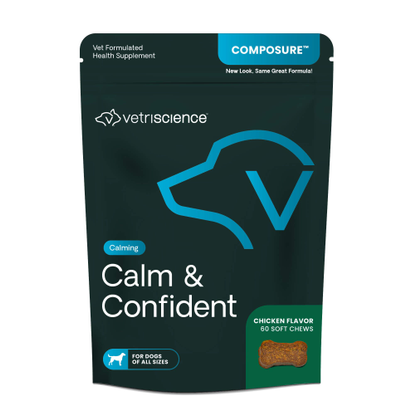
VetriScience Calm and Confident Soft Chews for Dogs
These calming dog treats are formulated with thiamine, L-theanine, and a colostrum calming complex biopeptide blend. The chicken-flavored chews can be given daily or during times when your dog is more likely to feel stressed.
Ollie Calming Chews for Dogs
Ollie’s “chill pill” calming formula is a plant-based blend that includes ginkgo biloba leaf, chamomile, melatonin, L-tryptophan, and valerian root. The chews come in a peanut butter and banana flavor. Dogs up to 30 pounds are typically given one chew per day, while dogs weighing 91 pounds or more may be given up to four chews daily.
Calming Chews for Dogs: Other Considerations
As you decide whether calming chews are right for your dog, it’s important to read product labels carefully and understand how these supplements work.
How quickly calming chews take effect varies depending on the product and its active ingredients. Some calming chews are designed to start working within about 30 minutes, while others require consistent daily use to be most effective, Dr. Cahn says. “Ingredients such as alpha-casozepine and L-tryptophan need to build up in the body over several weeks to be most effective,” she says, “while L-theanine and melatonin work more quickly.”
Be cautious of marketing claims, especially those labeled as “natural.” “Many ‘natural’ supplements can actually interact with medications or even be harmful,” Dr. Anderson warns. “For instance, St. John’s wort—an herbal supplement sometimes used for anxiety or depression—can interfere with a number of commonly prescribed medications.”
Some supplements that are safe for people can be dangerous for pets. The ASPCA lists 5-HTP, a supplement often used to improve mood or sleep in humans, as one of the top 10 deadliest pet poisons.
It’s also important to remember that the U.S. Food and Drug Administration (FDA) does not review supplements, herbal remedies, or nutraceuticals for safety or effectiveness before they are sold, whether they’re for humans or pets. Manufacturers are responsible for ensuring their products are safe and properly labeled.
Read the label carefully

Consider the following when choosing a supplement for your dog:
- Use the Association of American Feed Control Officials (AAFCO) guide to animal supplements to better understand dog supplement labels.
- Look for the National Animal Supplement Council (NASC) Quality Seal, which means the company passes a third-party audit every 2 years and meets the standards set forth by the NASC to ensure quality, vigilance, and ongoing improvement.
- Review the ingredient list closely and talk to your veterinarian about anything you’re unsure of.
- Consider calories and nutrient content. Calming chews should count toward your dog’s daily treat allowance. Treats should make up no more than 10 percent of your dog’s daily caloric intake.
- Some calming treats may contain non-active ingredients that can trigger skin inflammation in pets with food allergies. Make sure to check out the full list of ingredients if you have a food-allergic pet.
- If your dog is already taking a behavioral medication, do not add calming chews without speaking to your veterinarian first. “Dogs on serotonergic behavioral medications (such as fluoxetine, sertraline, or clomipramine) may be at greater risk for side effects when given supplements that also influence serotonin, like L-tryptophan, L-theanine, or melatonin,” Dr. Cahn says.
How to Use Calming Chews as Part of a Healthy Action Plan
Calming chews may help support dogs with anxiety, but they work best as part of a larger stress-reduction plan. Other helpful strategies include regular exercise, mental stimulation such as puzzle toys or lick mats, and slowly introducing dogs to new situations and experiences.
“Calming chews may play a supportive role, but they are rarely effective as a standalone solution,” Dr. Anderson says. “There is no single fix; it’s about addressing the whole animal.”
References
- Kritikos, Georgia et al. “The Role of Thiamine and Effects of Deficiency in Dogs and Cats.” Veterinary Sciences vol. 4,4 59. 24 Nov. 2017, doi:10.3390/vetsci4040059