
Flea Shot for Dogs: Benefits and How It Works

Fleas present a constant threat for any dog parent. Not only are fleas disgusting, but they can also cause blood loss, skin irritation, and other problems in dogs. Fortunately, there are many ways to fight fleas. In addition to topical and oral flea preventatives that have been available for years, there is now a new choice for flea prevention — a flea shot for dogs. This injection, given every eight to 12 months, effectively controls both fleas and ticks. Read on to learn more.
What Are Flea Shots for Dogs?
When dogs were first domesticated, people had no choice but to live with fleas or pick them off by hand. Over time, topical dips and sprays became available; these products killed fleas, but they had no lasting activity and dogs quickly became reinfested. In the 1990s, topical long-acting flea preventatives were first introduced. Oral monthly flea preventatives became available in the 2010s, giving another effective way for dog parents to prevent fleas. While these options were convenient, some dog parents wished for an easier choice. Multiple clients asked me, “is there a flea and tick shot for dogs?”
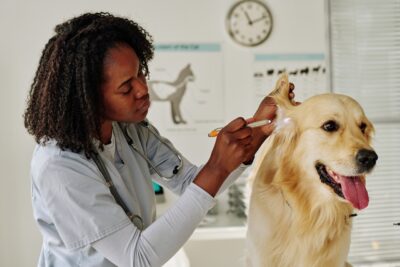
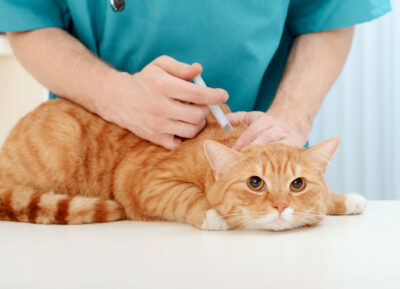
In July 2025, the U.S. Food and Drug Administration (FDA) approved the first flea injection for dogs: Bravecto® Quantum. This injection is given by your veterinarian or a veterinary technician. It protects against fleas and ticks for up to 12 months in dogs and puppies 6 months of age and older.
Bravecto Quantum kills adult fleas and treats and prevents flea infestations. It also treats and controls tick infestations — black-legged ticks, American dog ticks, and brown dog ticks — for 12 months. However, Bravecto Quantum only offers eight months of protection against the lone star tick. If lone star ticks are common in your area, your veterinarian may recommend giving your dog’s flea injection every eight months instead of once yearly.
The active ingredient in the Bravecto shot for dogs is fluralaner. This is the same chemical found in oral Bravecto tablets, which have been on the market since 2014. While oral Bravecto tablets control fleas and ticks for three months, the Bravecto Quantum injection has a special extended-release formulation of fluralaner that is effective for 12 months (with the exception of lone star ticks).
Although flea and tick injections offer excellent protection against fleas and ticks, they do not protect against heartworms or intestinal worms. Therefore, you will still need to give your dog a monthly or long-acting internal parasite preventative.
Benefits of Flea Shots for Dogs (and Things to Consider)

Year-round flea/tick protection is essential for all dogs. While dogs living in northern areas were once thought to be at minimal risk during the winter months, that is no longer the case. Changes in local weather and human development have led to increased risk of fleas and ticks even during the winter months. Therefore, the Companion Animal Parasite Council (CAPC) now recommends year-round flea and tick control for all dogs, regardless of geographic location.
While many dog parents give a monthly tablet for flea and tick control, it is easy to miss a dose. A missed dose can not only lead to annoyance caused by fleas and ticks, but it can also increase a dog’s risk of serious tick-borne diseases, such as Lyme disease, anaplasmosis, and ehrlichiosis. A once-yearly flea shot removes the risk of a missed dose, ensuring that your dog receives year-round flea and tick protection.
Flea Shot for Dogs Cost
The cost of a Bravecto Quantum injection will vary, depending on your dog’s weight and your area’s local veterinary costs. In most veterinary practices, the cost of a Bravecto Quantum injection is similar to the cost of 12 months’ worth of oral Bravecto tablets.
If you have pet insurance, it may offset the cost of a flea and tick shot for dogs. Many pet insurance policies only cover illnesses and injuries, but some policies offer coverage for wellness services.
How to Tell if Flea Shots are Right for Your Dog

Dog shots for fleas and ticks are an excellent choice for most dogs, but your veterinarian will help you decide whether your dog is a candidate for these injections. Talk to your veterinarian about the pros and cons of a one-year flea shot for dogs, both in general and given your dog’s specific history and medical conditions.
Fluralaner works by affecting the nervous system of fleas and ticks, acting on receptors that are found in insects but not in mammals. This allows fluralaner to kill fleas and ticks, with a low risk of side effects for mammals. However, seizures are an uncommon side effect of fluralaner in dogs. Therefore, veterinarians usually avoid fluralaner in dogs with a history of seizures. If your dog has a history of seizures or other neurologic conditions, talk to your veterinarian about the best flea and tick control for your dog.
Although the risk of serious reactions to a dog flea shot is low, reactions can occur. If your dog has not previously taken fluralaner and you are hesitant to give a long-acting fluralaner injection, talk to your veterinarian about using a single dose of oral fluralaner to screen for potential drug reactions. If your dog tolerates oral fluralaner, the risk of a reaction to a fluralaner injection is low. On the other hand, if your dog reacts to oral fluralaner, you should avoid injectable flea and tick protection for dogs.
If you have questions about side effects or risks associated with the Bravecto injection for dogs, talk to your veterinarian. They can walk you through the pros and cons of the dog flea and tick shot and alternative methods of flea and tick control. With this information, you and your veterinarian can work together to select the best parasite preventative for your pet.