

Best Dewormer for Dogs: 4 Vet-Approved Picks

All featured products are chosen at the discretion of the GreatPetCare editorial team and do not reflect a direct endorsement by the author or reviewer.
While unpleasant to think about, the reality is that worms are quite common in dogs. In a recent study, researchers found intestinal parasites in more than 20 percent of dogs and 85 percent of dog parks across the U.S. [1].
The good news? It’s easy to treat worms in dogs and protect your canine companion against future infections. There are several dewormers for dogs available on the market you can use to get rid of worms. Also, several long-term parasite control products exist to protect dogs from worms year-round.
Here’s a sneak peek at the top vet-approved dog dewormers that made our list.
Our Top Picks
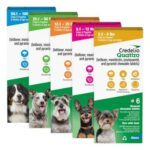
Credelio Quattro™ Chewable Tablets for Dogs
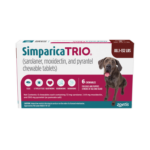
Simparica TRIO™ Chewable Tablets for Dogs
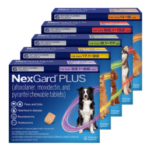
NexGard® PLUS Chewable Tablets for Dogs
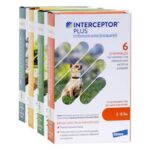
Interceptor® Plus Dog Chewable Tablets
Now, let’s take a closer look at why deworming dogs is so important, plus explore some of the top options to treat and control infection.
What Is Deworming for Dogs?

All dogs are at risk for encountering worms, such as hookworms, roundworms, whipworms, and tapeworms. Dewormers are medications that kill intestinal parasites that your dog may have contracted. “Broadly, these medications are called anthelmintics,” explains Dr. Audrey Wystrach, DVM, CEO of Petfolk. Some medications also help to prevent reinfection for a period of time.
“Many deworming products are effective for more than one type of worm,” Dr. Wystrach adds. “There are many different varieties and drug classes; generally, products that are effective against flat-shaped worms like tapeworms are not effective against round-shaped worms, such as roundworms, whipworms, and hookworms.”
Dewormers are available in a variety of forms, such as pills, chewable tablets, and liquids. Some of the common active ingredients you’ll see in these medications include:
- Febantel or Fenbendazole: Used to treat roundworms, hookworms, lungworms, whipworms, and some rare species of tapeworms
- Ivermectin: Heartworm preventative that’s also effective against hookworms and roundworms
- Pyrantel Pamoate: Effective against intestinal roundworms and hookworms
- Praziquantel: Most commonly used to treat tapeworms
While most of the above options need a vet’s prescription, some over-the-counter options also exist.
How Do Dogs Get Worms?

You might think it’s impossible for your dog to have worms. But unfortunately, your pup can pick up these parasites just from being outside. From sticking their nose in the dirt, to chasing and eating small animals, many scenarios can put dogs at risk of contracting worms.
“Intestinal worms, such as hookworms, roundworms and whipworms, are commonly transmitted when dogs ingest contaminated soil or feces containing eggs, or immature worms that have been passed from other infected animals in the environment,” Dr. Wystrach explains.
Your dog can also contract a common species of tapeworm by ingesting an infected flea while grooming themselves.
Another type of worm that dogs are at risk of—though not an intestinal worm—is called heartworm. Heartworm is an internal parasite that lives in the blood vessels inside the lungs and heart. Dogs can get heartworms after being bitten by an infected mosquito. Heartworms can cause organ damage, heart failure, and death if left untreated.
Why Dewormer for Dogs Is Important
Dewormer is not only important to rid your pet of an infection. It also helps keep the entire household healthy. Some intestinal worms, like roundworms and hookworms, are also infectious to people.
If left untreated, these parasites can cause serious health problems for your dog. Intestinal worms can lead to several GI problems like diarrhea, abdominal pain, weight loss, and vomiting. Most veterinarians recommend using year-round parasite protection to keep your dog healthy and avoid reinfection.
If your dog has intestinal worms, your veterinarian will prescribe a deworming medication. Once the infection has cleared, your veterinarian may recommend year-round parasite protection medication. In other cases, your vet may recommend treating the infection with a long-term parasite protection medication. In other words, year-round parasite protection medications are dewormers.
If your dog is on a heartworm preventative, these medications are often effective against some intestinal worms, too.
4 Vet-Approved Dewormers for Dogs
It’s important to talk with your veterinarian to choose the best treatment option for your dog. “Product type, dosing, and frequency are all very important factors when considering treatment,” Dr. Wystrach says. Your veterinarian will also consider factors such as your dog’s age, breed, and other medical conditions to select the best option.
Best Broad-Spectrum Dewormer for Dogs
Our Pick: Credelio Quattro

Credelio Quattro covers more parasite types than any other chewable on this list, making it a strong choice for pet parents who want comprehensive protection in a single monthly dose. Its four active ingredients — lotilaner, moxidectin, praziquantel, and pyrantel — work together to kill fleas and ticks, prevent heartworm disease, and treat and control roundworm, hookworm, and tapeworm infections, including three species of tapeworms. It comes in a beef-flavored chewable and must be given with food or within 30 minutes of a meal.
Highlights
- Covers six types of parasites: fleas, ticks, heartworms, roundworms, hookworms, and tapeworms
- Treats three species of tapeworms
- Beef-flavored chewable given once monthly
- Approved for puppies as young as 8 weeks weighing 3.3 pounds or more
- Must be given with food or within 30 minutes of a meal
Things to Consider
- Does not protect against whipworms
- Available by prescription only
- Dogs should be tested for existing heartworm infection prior to starting this product
- Use with caution in dogs with a history of neurologic conditions, including seizures
- Safe use in breeding, pregnant, or lactating dogs has not been evaluated
Best Dewormer with Heartworm Prevention
Our Pick: Simparica TRIO
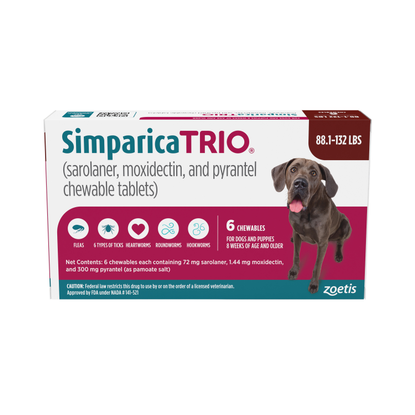
Simparica TRIO is a monthly, liver-flavored chewable that protects dogs against heartworm disease while also treating and controlling roundworm and hookworm infections. Its three active ingredients are sarolaner, moxidectin, and pyrantel. In addition to its deworming action, Simparica TRIO kills fleas and controls five species of ticks. It can be given with or without food and is suitable for puppies 8 weeks of age and older weighing at least 2.8 pounds.
Highlights
- Prevents heartworm disease
- Treats and controls roundworm and hookworm infections
- Also kills fleas and controls five species of ticks
- Can be given with or without food
- Approved for puppies as young as 8 weeks weighing 2.8 pounds or more
Things to Consider
- Does not protect against tapeworms or whipworms
- Available by prescription only
- Dogs should be tested for existing heartworm infection prior to starting this product
- Use with caution in dogs with a history of neurologic conditions, including seizures
Best Dewormer for Dogs with Flea and Tick Protection
Our pick: NexGard Plus

Roundworms and hookworms are two of the most common intestinal worms in dogs. NexGard PLUS treats and controls three species of hookworms and two species of roundworms in dogs. The active ingredients are afoxolaner, moxidectin and pyrantel. These monthly, beef-flavored chews also kill fleas and ticks and prevent heartworm disease.
See important safety information for NexGard PLUS below.
Highlights
- Beef-flavored soft chew is easy to give once a month
- Treats and controls roundworms and hookworms
- Also protects dogs from fleas and ticks and prevents heartworm disease
- Approved for puppies as young as 8 weeks weighing 4 pounds or more
Things to Consider
- Does not protect against whipworms or tapeworms. But it does kill fleas, which can carry tapeworms
- Available by prescription only
- Dogs should be tested for existing heartworm infection prior to starting this product
Best Dewormer for Dogs with 5-Worm Protection
Our Pick: Interceptor Plus

Interceptor Plus is a monthly, chicken-flavored chewable that covers five types of dangerous worms. It protects dogs against heartworm disease and hookworm, roundworm, tapeworm, and whipworm infections. The active ingredients in Interceptor Plus are milbemycin oxime and praziquantel. This prescription medication is suitable for dogs 6 weeks or older and 2 pounds or greater.
Highlights:
- Prevents heartworm disease
- Treats and controls roundworm, hookworm, whipworm, and tapeworm infections
- Given once monthly
- Chicken-flavored chewable tablets
Things to Consider
- Available by prescription only
Buyer’s Guide: Dewormer for Dogs

Here are some factors to take into consideration before choosing the right dewormer for your dog:
Proper diagnosis: If you think your dog has worms, consult your vet for a proper diagnosis before treatment. “Parasitism is an important conversation to have with your veterinarian,” Dr. Wystrach says. “A fecal evaluation is critical to define and diagnose the type of parasitism present, as well as the proper treatment protocols and safety precautions. It is important to note that, many times, pets harbor more than one parasitic infection at a time.”
Types of parasites: There are several types of intestinal worms that can affect dogs. Different medications are effective against different parasites. Some dewormers also help to prevent heartworm disease, which can cause serious illness and death.
Active ingredients: Some of the most common active ingredients in dog dewormers include febantel, ivermectin, pyrantel pamoate, and praziquantel. Each one is effective against specific types of worms. Talk to your veterinarian about which ingredients make sense for your pet.
Frequency and dosing: When selecting a treatment, you’ll also want to consider how often it needs to be administered and the proper dose for your pet. Medications that contain a heartworm preventative are typically given on a monthly basis.
Parasite prevention: Even if your dog doesn’t currently have worms, your veterinarian may recommend a year-round parasite protection product based on your pet’s individual needs and offer guidance on the proper dosage and frequency.
Dog Dewormer FAQs
How often should you deworm your dog?
The Companion Animal Parasite Council recommends that all dogs be on year-round parasite prevention that protects against both heartworms and intestinal worms. If you do not give monthly heartworm prevention to your dog, you should administer a dewormer at least once every three months.
How long does it take for a dog dewormer to work?
Dog dewormer starts working quickly, usually within a few hours of administering the product. However, it may take up to a week to completely rid your dog of parasites.
Does dewormer cause diarrhea in dogs?
Side effects after deworming are relatively uncommon. When they do occur, side effects include lack of appetite, gastrointestinal upset, vomiting, and diarrhea. You may notice visible worms passing in your dog’s stool, as the worms die and leave the intestines.
Is there such a thing as a natural dewormer for dogs?
If you believe your dog has worms, Dr. Wystrach advises against using a natural dewormer. “Many naturally occurring plants and remedies can be toxic or harmful to pets,” she says. “Natural does not equate to safe.”
References
- Stafford, K., Kollasch, T.M., Duncan, K.T. et al. Detection of gastrointestinal parasitism at recreational canine sites in the USA: the DOGPARCS study. Parasites Vectors 13, 275 (2020). https://doi.org/10.1186/s13071-020-04147-6
NexGard PLUS Important Safety Information
NexGard® PLUS (afoxolaner, moxidectin, and pyrantel chewable tablets) is safe for puppies at 8 weeks, weighing 4 pounds or more. The most frequently reported adverse reactions include diarrhea, vomiting, lethargy, and itching. Use with caution in dogs with a history of seizures or neurologic disorders. Dogs should be tested for existing heartworm infection prior to starting a preventive. For more information, click here for full prescribing information.