

Sponsored by CareCredit
Dog Bloat Surgery: Cost and What to Expect
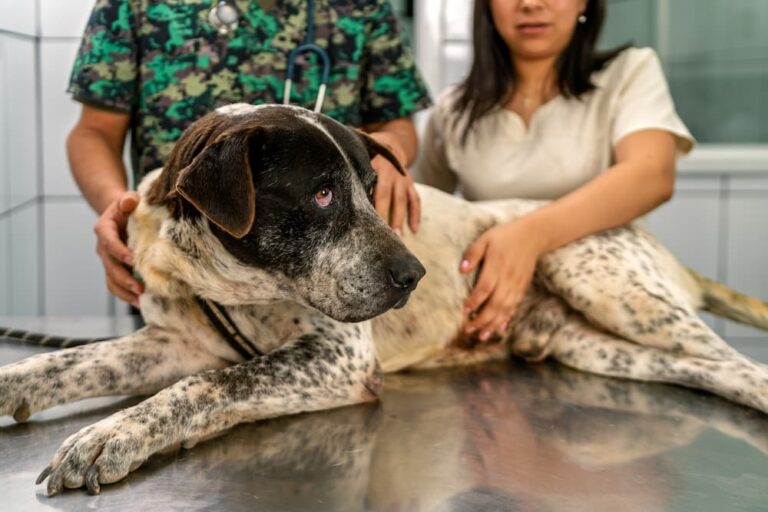
When dogs develop gastric dilatation and volvulus (GDV), pet parents often feel a bit overwhelmed and in the dark. Perhaps you’ve never even heard of GDV before, and suddenly you’re learning that your dog may need emergency surgery. You may be wondering how much dog bloat surgery cost will set you back or what to expect during and after the procedure. And on top of all that, you’re worried about your pup.
While undeniably stressful, learning about dog bloat surgery can help you overcome the overwhelm. And that’s crucial, because bloat can come on suddenly and may be life-threatening. Understanding what the surgery entails and what’s at stake will help you make the best decisions for your pet.
Those decisions can come with unexpected (and often hair-raising) health costs. Having a plan to manage such expenses is crucial when every second counts. Options like pet insurance or a CareCredit credit card with flexible financing can provide financial peace of mind, so you can focus on your pet’s health, not your bank balance.*
What Is Bloat Surgery for Dogs?
When we say “bloat surgery,” we usually mean corrective surgery for GDV. This condition occurs when gas builds up in a dog’s stomach (bloat/dilatation) and causes it to twist on itself (volvulus). When that happens, it cuts off the entrance and exit to the stomach and restricts blood flow to the organ.
As gas production continues in the stomach, the stomach continues to expand, pressing on major vessels within the abdomen and reducing blood flow to the heart. Without intervention, dogs can experience shock and multiple organ dysfunction. The spleen may also twist up with the stomach, potentially causing internal bleeding or leading to necrosis of the spleen.
GDV is a common life-threatening condition mostly seen in large and giant dogs. A dog’s breed significantly influences its risk of developing bloat and stomach flipping, with deep-chested dogs like Great Danes at a significantly increased risk. Without medical treatment and surgery, GDV is life-threatening.
The dog bloat timeline is extremely short. Many dogs develop life-threatening shock within just a few hours of showing symptoms. With surgery, the survival rate is over 80 percent. [1] Without surgery, GDV is nearly always fatal.
What Does Dog Bloat Surgery Involve?
If you think your dog has bloat or GDV, you need to get them to an emergency veterinarian right away. Obvious signs include a swollen or hard abdomen, non-productive retching, and excessive drooling. Do not worry about preparing your dog for surgery at home. It’s more important to get them to an emergency vet immediately.
At the ER, the veterinary team will take X-rays of your dog’s abdomen to determine if they have GDV. They’ll also perform bloodwork and other diagnostics to determine how stable your pet is.
To help relieve the bloat, the veterinarian will insert a needle through the abdominal wall into the stomach to release air, a procedure called trocharization. They may also attempt to pass a tube through your dog’s mouth into their stomach to help relieve gas. However, in some cases, the twisting of the stomach may block the tube. These measures must happen before surgery to stabilize your pet.
Dogs who are critically ill and in shock upon arrival will need to be stabilized with intravenous (IV) fluids, IV medications, and stomach decompression prior to surgery.
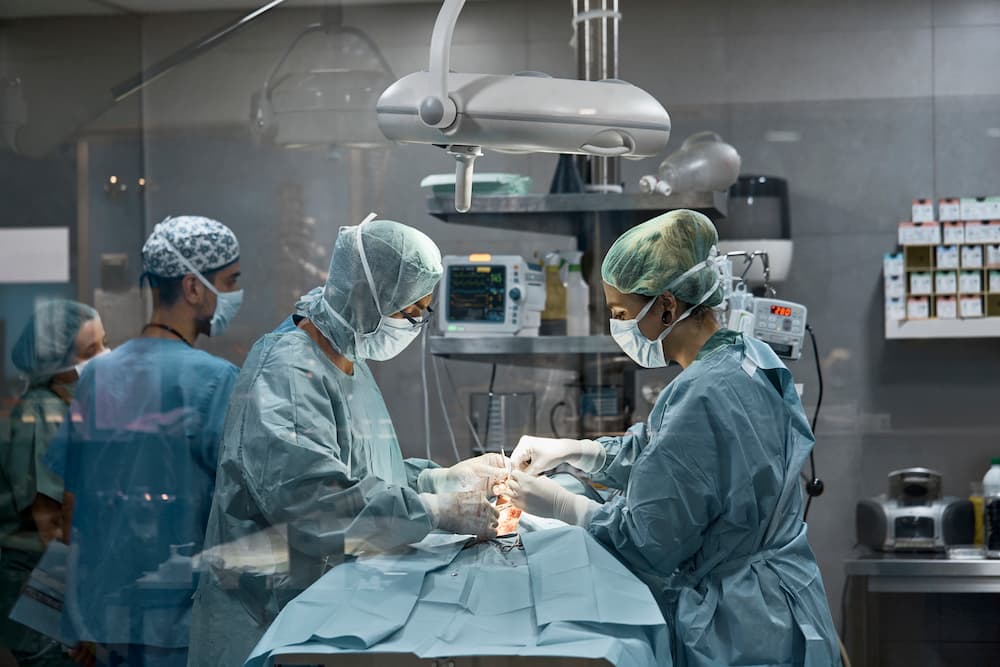
Once your dog is stable, surgery can begin. The vet will start by making an incision along the midline of the dog’s underbelly, providing access to the abdomen.
Then, they’ll flip the stomach back into its normal position and tack it to the inner wall of the dog’s body to prevent recurrence (gastropexy). In some cases, it may be necessary to remove the spleen and/or parts of the stomach.
An uncomplicated surgery may last under an hour. If removal of the spleen or parts of the stomach is necessary, the surgery will last longer.
If your dog’s stomach bloats but does not flip, the veterinarian will likely be able to decompress without having to do emergency surgery. However, they may recommend preventive gastropexy to prevent future GDV.
Dog Bloat Surgery Cost
So how much does dog stomach flip surgery cost?
Emergency gastropexy cost for dogs is usually between $3,000 to $6,000. [3]
Preventative gastropexy cost for dogs is usually between $800 to $2,500. [4]
However, the cost of GDV surgery in dogs can vary depending on your geographic location, whether your pet gets spayed or neutered at the same time, and the technique used.
Bloat in dogs surgery cost can also vary depending on your dog’s overall condition. You can expect to pay more if your dog:
- Requires significant stabilization (e.g., fluids, pain medications, etc.) prior to surgery
- Needs their spleen and/or part of the stomach removed
- Has an extended hospital stay due to case severity or complications.
Some pet insurance policies will cover or offset GDV surgery costs. However, it is always a good idea to check your plan’s accident and illness coverage to see if the condition is excluded. And most pet insurance companies do not usually cover preventative procedures. So you may be on your own when it comes to paying for a preventative gastropexy procedure.
That’s not the case with a CareCredit health and pet care credit card. With CareCredit’s flexible financing, you can pay for GDV surgery costs, preventative procedures, and any other type of care your dog needs. Plus, you can pay over time at any clinic or hospital in the CareCredit network.* That can make time-sensitive treatments much more feasible than emptying your savings.
Dog Bloat Surgery: Benefits and Risks
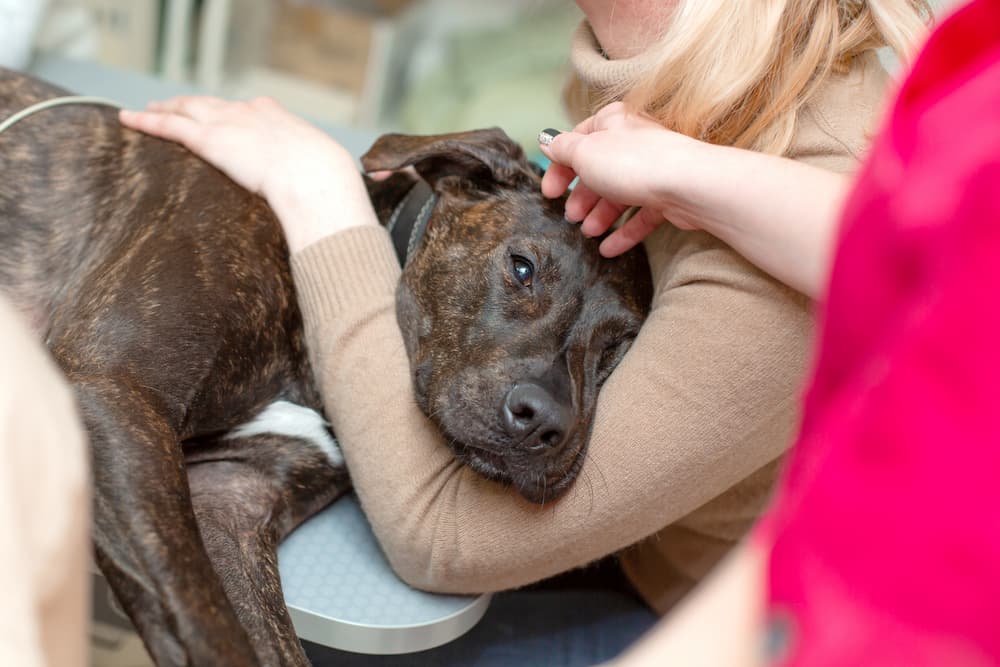
Remember, GDV is a critical condition. Dogs with GDV need surgery to survive. So that’s a definite benefit.
However, any surgery comes with risk. There is a chance that your dog might not survive GDV surgery or recovery. And that risk is higher for GDV surgery than it would be for routine surgeries like spay/neuter or preventative gastropexy.
As previously mentioned, around 80 percent of dogs who undergo GDV surgery survive. This means that there is still a 1 in 5 risk that a dog undergoing GDV surgery will pass away. The risk of death increases significantly if there is necrosis of the stomach at the time of surgery. [2]
Another benefit of bloat surgery is that the veterinarian can perform a gastropexy at the same time. During a gastropexy, the stomach is tacked to the abdominal wall to prevent future recurrence of GDV.
For many other procedures, like foreign body surgery, there isn’t really anything the veterinarian can do to prevent recurrence, other than provide tips on how to reduce environmental risks.
Most surgical procedures come with the risk of significant bleeding or infection. With a critical surgery like bloat surgery, these risks may be higher. Recovery is painful, but your veterinarian can provide medication to manage the pain and make your dog comfortable.
If a dog develops GDV, vets will most likely recommend surgery, even for dogs not considered a “good” candidate. The other option is euthanasia.
Dog Bloat Surgery Recovery
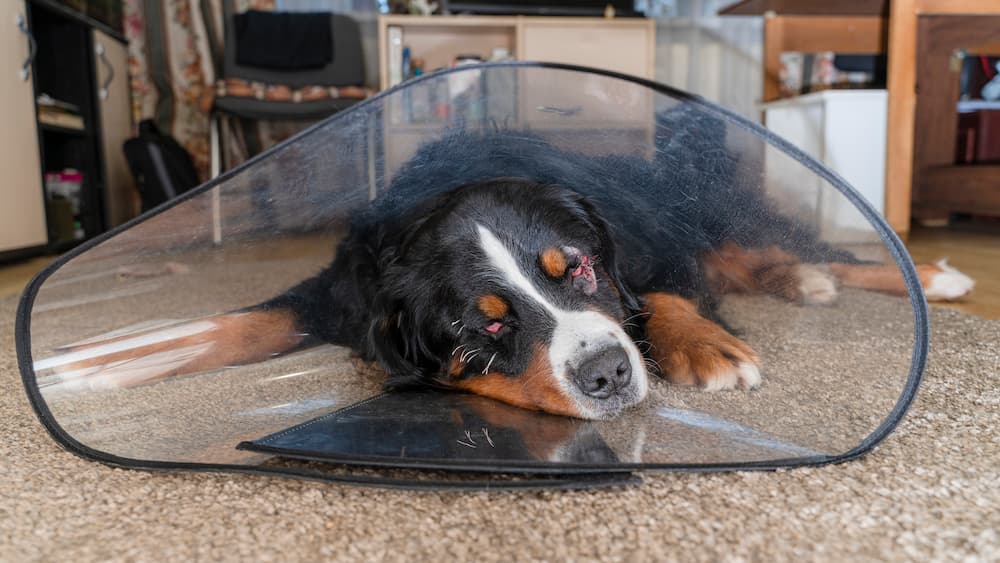
Your dog will need to remain hospitalized for anywhere from one to several days after surgery for monitoring. They should feel well within 10 to 14 days of surgery. You will likely be sent home with instructions covering crucial care topics, including.
Pain medications: While in the hospital, your dog will probably receive stronger pain medications, such as intravenous opioid medications. Your veterinarian will prescribe oral medications for you to give at home. Make sure you give these as prescribed.
Dietary recommendations: The vet will usually recommend small, frequent meals for at least a week after surgery. A bland, low-fat diet may be recommended during this time. Your veterinarian should give you instructions for how to transition back to your dog’s normal diet.
Activity restriction: Your dog should have their activity restricted while their incision and internal organs heal. Avoid allowing your dog to run, jump, or play roughly. You should take them outside on a leash for elimination, unless they use potty pads to eliminate. Strict activity restriction usually lasts 10–14 days. The incision must be kept clean and dry, so you should not bathe your dog or allow them to swim during the recovery period.
Incision monitoring: Monitor the incision for excessive bruising, coming apart, bleeding, and signs of infection. Signs of infection include swelling, redness, and pain. If you notice any of these signs, contact your veterinarian. An e-collar (recovery cone) or recovery suit may be recommended to keep your pet from licking their incision.
Rechecks: The ER may recommend a recheck with your primary veterinarian. This is usually 10 to 14 days after the surgery as long as everything is going alright. If your dog has skin staples or sutures, they may be removed during the recheck. Signs that your dog needs to be seen earlier include:
- Incision infection (pus, swelling, redness)
- Incision opening
- Blood dripping from the incision
- Vomiting
- Diarrhea
- Decreased or poor appetite
- Insufficient pain control (vocalizing, guarding the abdomen)
- Lethargy, weakness, or collapse
- Bloated belly
- Retching with nothing coming up
- Restlessness
- Pale gums
Please keep in mind that your dog may have a decreased appetite, some pain, some restlessness, and dark-colored stools for a day or two after surgery. This should improve over time rather than worsening.
Always follow your veterinarian’s recommendations for your dog’s recovery after emergency GDV surgery.
Reference
- O’Neill, D G et al. “Gastric dilation-volvulus in dogs attending UK emergency-care veterinary practices: prevalence, risk factors and survival.” The Journal of small animal practice vol. 58,11 (2017): 629-638. doi:10.1111/jsap.12723
- Rauserova-Lexmaulova, Leona et al. “Acid-Base, Electrolyte and Lactate Abnormalities as Well as Gastric Necrosis and Survival in Dogs With Gastric Dilation-Volvulus Syndrome. A Retrospective Study in 75 Dogs.” Topics in companion animal medicine vol. 39 (2020): 100403. doi:10.1016/j.tcam.2020.100403
- Laparoscopic Gastropexy. Chester Animal Hospital. Retrieved from https://chesteranimalhospitalnj.com/services/gastropexy/
- Preventive Gastropexy Surgery for Dogs. Bliss Animal Hospital. Retrieved from https://blissanimalhospital.com/blog/preventive-gastropexy-surgery-orange-county-ca/
*Subject to credit approval. See carecredit.com for details.
This information is shared solely for your convenience. Neither Synchrony nor any of its affiliates, including CareCredit, make any representations or warranties regarding the products described, and no endorsement is implied. You are urged to consult with your individual veterinarian with respect to any professional advice presented.