
Sponsored by Vetnique
Anal Gland Supplements for Dogs: 4 to Consider
All featured products are chosen at the discretion of the GreatPetCare editorial team and do not reflect a direct endorsement by the author or reviewer.
Have you ever watched your dog scoot across your living room rug? Or perhaps you’ve occasionally noticed a small amount of fishy-smelling liquid when your dog gets up from the couch after licking their hind end. If so, you’re familiar with dog anal glands—whether you realized it or not.
Anal glands, also referred to as anal sacs, are small pockets located on either side of a dog’s anus. These pockets connect to glands that secrete small amounts of foul-smelling fluid. In wild dogs, like hyenas, anal glands are used for scent marking, communication, and territory marking.
You may never notice your dog’s anal glands, but in some dogs, they can cause issues.
Anal Gland Support for Dogs: Why Your Vet Might Recommend Supplements
Normally, a dog’s anal glands empty during bowel movements, and the fluid passes unnoticed with the stool.
In some dogs, however, the anal glands can become problematic. The glands may become impacted (clogged), interfering with normal emptying. This allows material to accumulate within the gland, which can cause pain or discomfort. In some cases, impacted anal glands can lead to bacterial infections or abscesses.
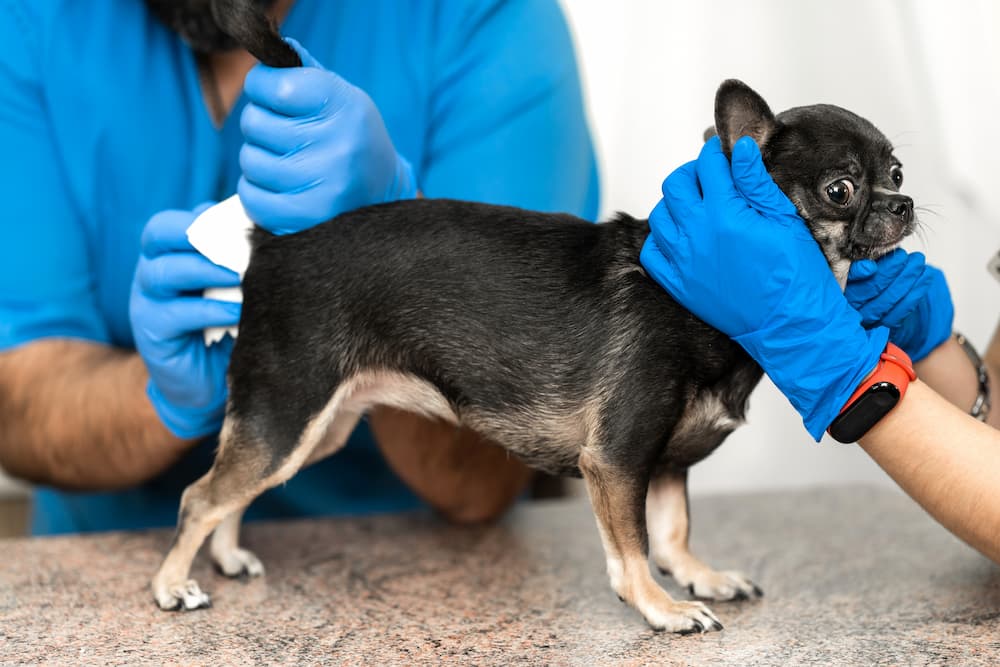
Dogs with anal gland problems need veterinary care. Treatment may include manual expression of the glands, pain medication, and/or antibiotics. In most cases, anal gland issues resolve quickly with treatment. However, dogs who experience chronic or recurring anal gland issues may require ongoing care and management.
Anal gland supplements are often recommended as a long-term strategy for dogs with recurrent anal gland issues. These supplements come in a variety of forms, including powders, soft chews, and sometimes gels. Glandex anal gland soft chews supplement for dogs, for example, are flavored chews that can be given as a treat.
Most anal gland supplements contain high levels of fiber. Fiber increases stool bulk, which makes it more likely that your dog’s anal glands will empty as stool squeezes past them. Some anal gland supplements also include ingredients that support digestive health or help reduce inflammation.
4 Anal Gland Supplements for Dogs
Before giving your dog any anal gland supplement, talk with your veterinarian. Your vet will perform a physical exam to ensure your dog is not dealing with an anal gland impaction or infection. They may also express the anal glands to start with a clean slate. From there, your veterinarian can recommend an appropriate supplement to help support ongoing anal gland health.
Here are four anal gland supplements your veterinarian may recommend:
Glandex Max Vet Strength
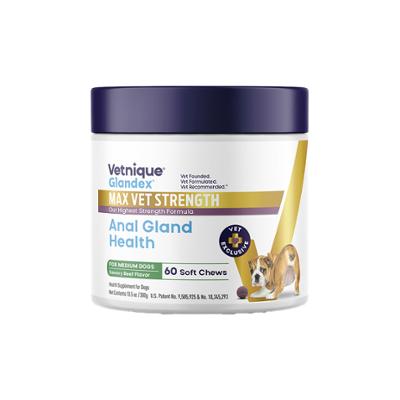
Glandex Max Vet Strength anal gland health soft chews contain fiber, enzymes, and probiotics to support digestive and anal gland health. Natural fiber sources include chicory root, green bean powder, flaxseed, pumpkin seed, and apple pectin. Together, these ingredients help promote natural anal gland emptying while supporting bowel, digestive, and immune health.
Glandex is also available in regular and advanced strength soft chew and powder formulas. Max Vet Strength is the highest-strength formula offered by Vetnique, the manufacturer of Glandex.
Highlights
- MegaFiber MAX blend provides soluble and insoluble fiber to support stool bulk
- Prebiotics and a probiotic blend support healthy gut bacteria
- Quercetin acts as an antioxidant and antihistamine to help calm GI inflammation and support stool quality
- Zeolite helps reduce fiber-related side effects and bind gut irritants
- Enzymes help break down proteins, carbohydrates, and fats for smoother digestion and more consistent stools
Things to Consider
- May cause diarrhea if started suddenly
- May cause constipation if not combined with adequate water intake
Nutramax Filaquin Anal Gland Supplement
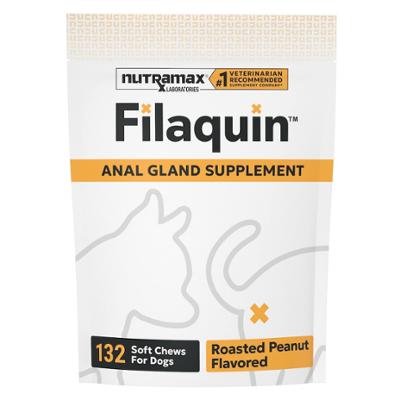
Filaquin soft chews contain both insoluble and soluble fiber to help promote normal stool consistency, which supports regular anal gland emptying. Filaquin also includes prebiotics and postbiotics to support beneficial gut bacteria, along with beta-glucan to support immune health.
Highlights
- Contains a proprietary blend of yeast extract (beta-glucan), apple fiber, yeast culture (postbiotic), and psyllium husk fiber
- Includes a blend of soluble and insoluble fiber
Things to Consider
- May cause diarrhea if started suddenly
- May cause constipation if not combined with adequate water intake
VetriScience Scoot Control
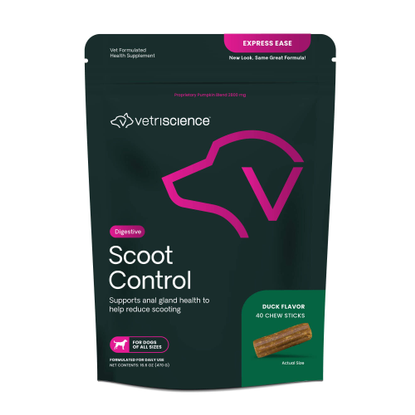
Scoot Control is a soft chew anal gland supplement designed to increase stool bulk through added fiber. These chews contain a proprietary blend of pumpkin fiber, larch tree extract, and digestion-resistant maltodextrin (DRM) to support healthy digestion.
Highlights
- Pumpkin fiber, larch tree extract, and DRM help increase fecal bulk
Things to Consider
- May cause diarrhea if started suddenly
- May cause constipation if not combined with adequate water intake
- Does not contain probiotics or immune-support ingredients
VetClassics No Scoot Soft Chews
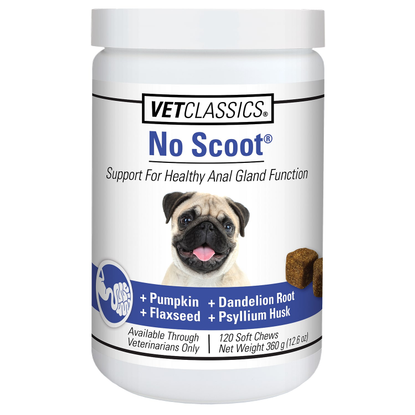
These veterinarian-formulated soft chews increase dietary fiber intake through the use of five ingredients: pumpkin, flaxseed, dandelion root, psyllium husk, and beet pulp. The added fiber helps support digestive function and stool consistency.
Highlights
- Contains five sources of fiber: pumpkin, flaxseed, dandelion root, psyllium husk, and beet pulp
- Contains added vitamins and minerals
Things to Consider
- May cause diarrhea if started suddenly
- May cause constipation if not combined with adequate water intake
- Does not contain probiotics or immune-support ingredients
Dog Supplements for Anal Glands: Tips and Safety
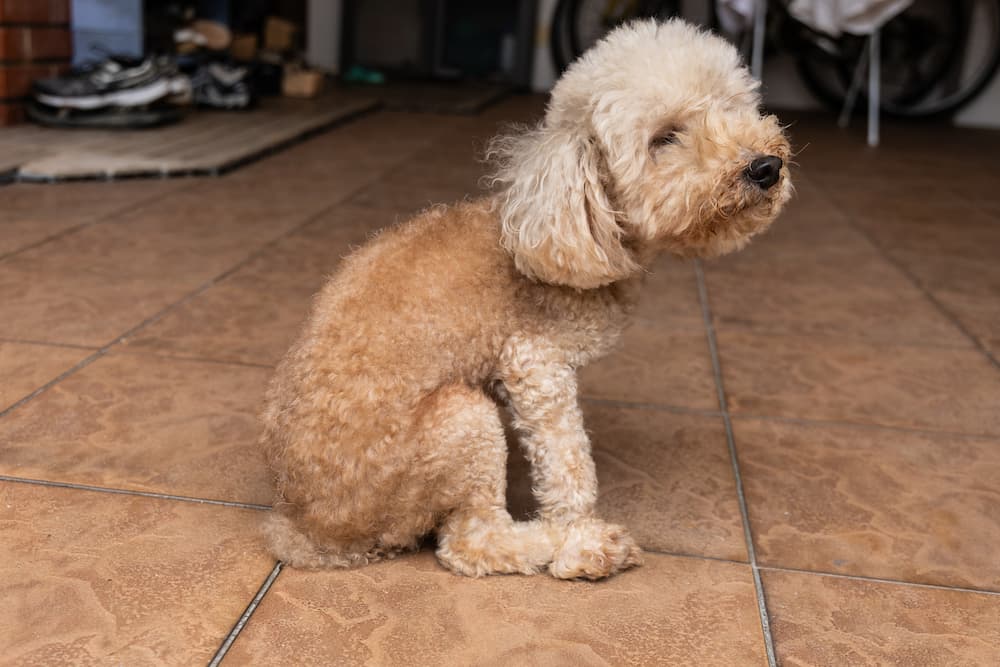
Talk with your veterinarian before giving your dog an anal gland supplement. Your veterinarian can confirm the problem is associated with your dog’s anal glands and ensure that no other immediate treatment is required. Because your veterinarian knows your dog’s medical history, they can also help you choose the most appropriate supplement.
Anal gland supplements are generally safe and well tolerated. However, a sudden increase in dietary fiber may lead to gas or soft stools in some dogs. For this reason, veterinarians often recommend starting with a lower dose and gradually increasing it over a period of approximately one week.
Allergic reactions are another potential, though rare, side effect, as some dogs may be sensitive to certain ingredients found in supplements. If your dog shows signs of an allergic reaction after starting a supplement, contact your veterinarian immediately.
Finally, remember that anal gland supplements are intended to bulk up the stool. Your dog’s stools may appear slightly larger or firmer than usual; this is normal. Be sure that your dog always has access to fresh, clean water to help prevent overly firm stools or constipation.